Early Sri Lankan
Migration to Australia

What happened to the 500 Sri Lankans who came to Queensland onboard the SS Devonshire in 1882?

Sidath Chandrasena  ·  Lafayette College, Easton, Pennsylvania
Digital Humanities Summer Scholars  ·  June 21, 2022

↓ Scroll to explore

The mass migration of Sri Lankans to Queensland in the late 19th century is an anomaly in a period when acceptance of non-European migrants was heavily scrutinised.

Yet in 1882, the SS Devonshire left Galle, Ceylon (now Sri Lanka) with 500 Cingalese, bound for Mackay & Bundaberg in North Queensland. Many of these migrants remained in Australia after federation in 1901, despite the hostile environment towards non-Europeans.

Little information exists about this migration, apart from a few pieces of literature, newspaper articles and records.

Part 1 — Hiring Labourers
from Ceylon

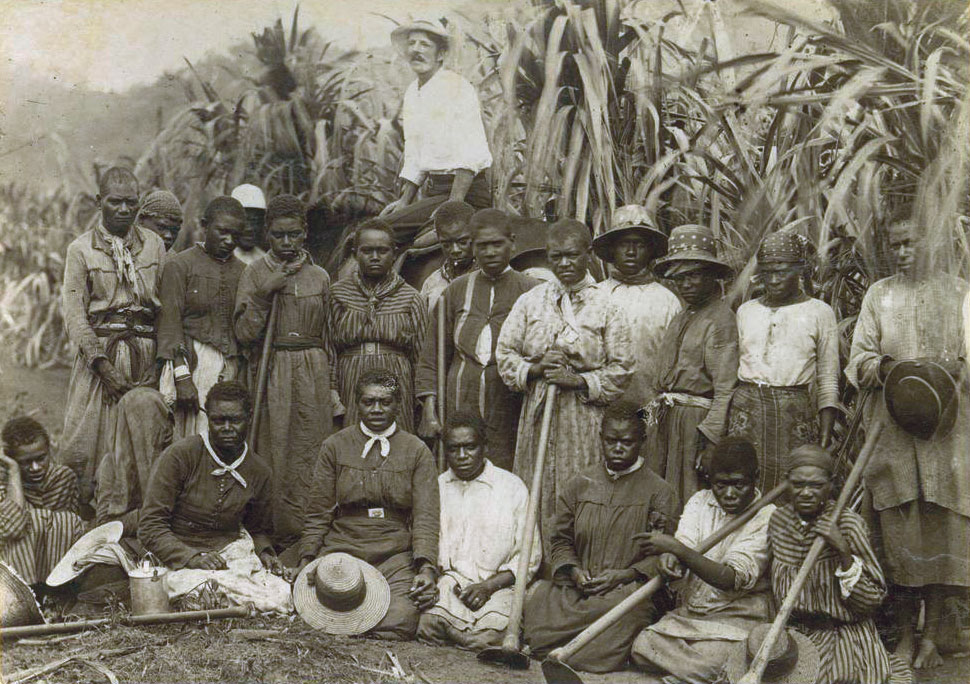
South Sea Islander farm workers on a sugar plantation at Cairns, 1890 South Sea Islander farm workers on a sugar plantation at Cairns, 1890 · (State Library of Queensland; The Commons)

Indentured Labour: A Solution to Blackbirding

Following the expansion of sugarcane farming in the late 1800s, planters in the sugar industry faced a dilemma. They believed that sugarcane plantation work was unsuitable for Europeans, but did not wish for non-Europeans to come and settle in Queensland.

As a solution to this, it is estimated that more than 60,000 South Sea Islanders were transported to Queensland and Northern New South Wales between 1863 and 1904 for work on sugarcane plantations, in a practice termed 'blackbirding'4. These people were from more than 80 Pacific Islands, often brought using coercion, or force. It is estimated that one-third of workers brought were kidnapped or brought through trickery.

The poor and arduous conditions of sugarcane plantation work, and the lack of labour contracts to protect the rights of the workers, meant that these workers were effectively treated as slaves and many died on the plantation fields. In the 1870s and 80s, the mortality rate exceeded 6 percent, and in 1885, was just under 10 percent5.

The high mortality rates and opposition from the Anti-Slavery Society in Britain soon made this practice unsustainable, and in the search for cheap, indentured labour, sugarcane planters looked to various parts of Asia, including Ceylon.
The Decision to Source Labour from Ceylon

Planters in Queensland initially sought to obtain Indian Tamil labourers that had been brought to many British colonies abroad including Ceylon and were described as being 'the most docile, most amenable labour force in the world'2. However, the British Indian government refused to permit the planters to bring these workers, citing the mistreatment of the South Sea Islanders in Queensland.

The planters then looked to Ceylon, where no legislation had been put in place due to lack of emigration and small population on the island. Although Indian Tamil labourers were unavailable, it was possible to hire the native population of Sinhalese people.

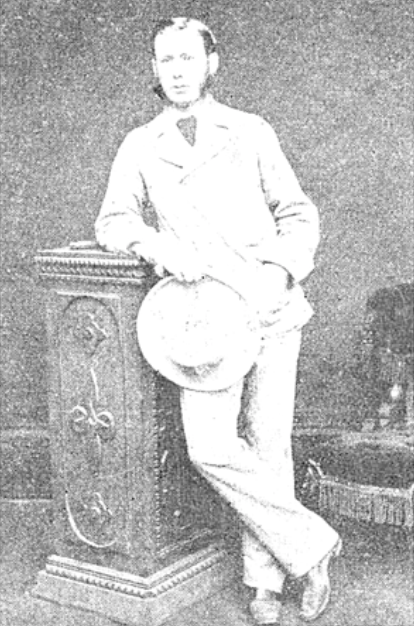
Horace Burkitt of Bundaberg contacted his brother-in-law, Henry Caulfield, a resident in Ceylon to organise the recruitment of 500 workers.

Henry St George Caulfield Henry St George Caulfield · Published in "Adventurous Life Of Henry Caulfeild, Late Inspector of Pacific Islanders", The Steering Wheel and Society & Home, 1937 (out of copyright)

'Beyond attending to their village holdings and rice fields, they did not take up agricultural work, though they were first class timber fellers, good carpenters, sawyers and masons. Yet under different conditions and away from local influences they might make good agricultural labourers.'

— Henry St George Caulfield, on the suitability of Sinhalese workers1
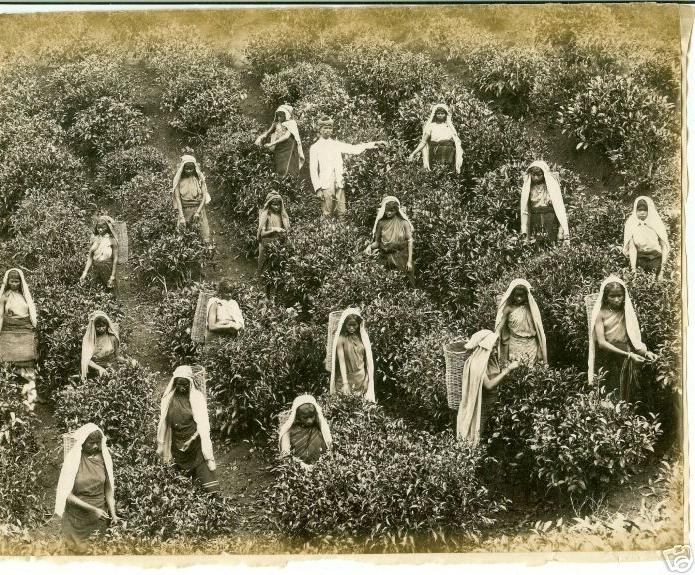
Ceylon tea pickers Tea pickers in Ceylon in the late 1800s around the time of the fall of the coffee industry (Unknown author, in the public domain)

Reasons for Emigration

No mass migration out of Ceylon had occurred in the past century, and scholars cite several factors motivating these migrants to emigrate.

Swan writes the fall of the coffee industry in the 1870s and 1880s changing the attitudes of many who may not have otherwise decided to embark abroad8. Caulfield cites adventurousness, writing that they were 'keen on seeing what the outside world was like'.

Concerns Over Fairness of Contract

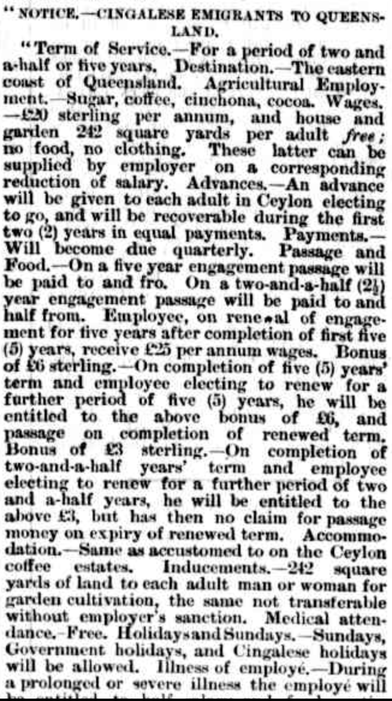
Shortly after the advertisement was published, the Ceylon government grew concerned over the fairness of the contract, given that the wage was £20 without food and lodging when rice, a key staple of the Sinhalese, was heavily taxed in Queensland.

In response, the Colonial Secretary of Ceylon began correspondence with his counterpart in Queensland inquiring about the contract, and interviewed Caulfield.

Following the Queensland government's response that the wages were not sufficient for the workers, the Ceylon government began writing legislation, but this was not proclaimed in time before the Devonshire departed Galle on November 18, 1882 for Queensland.

Contract published in the Ceylon Observer in 1882 Extract of contract published in the Ceylon Observer in 1882 (The Queenslander, 1882)

Part 2 — Journey to Australia
& Arrival

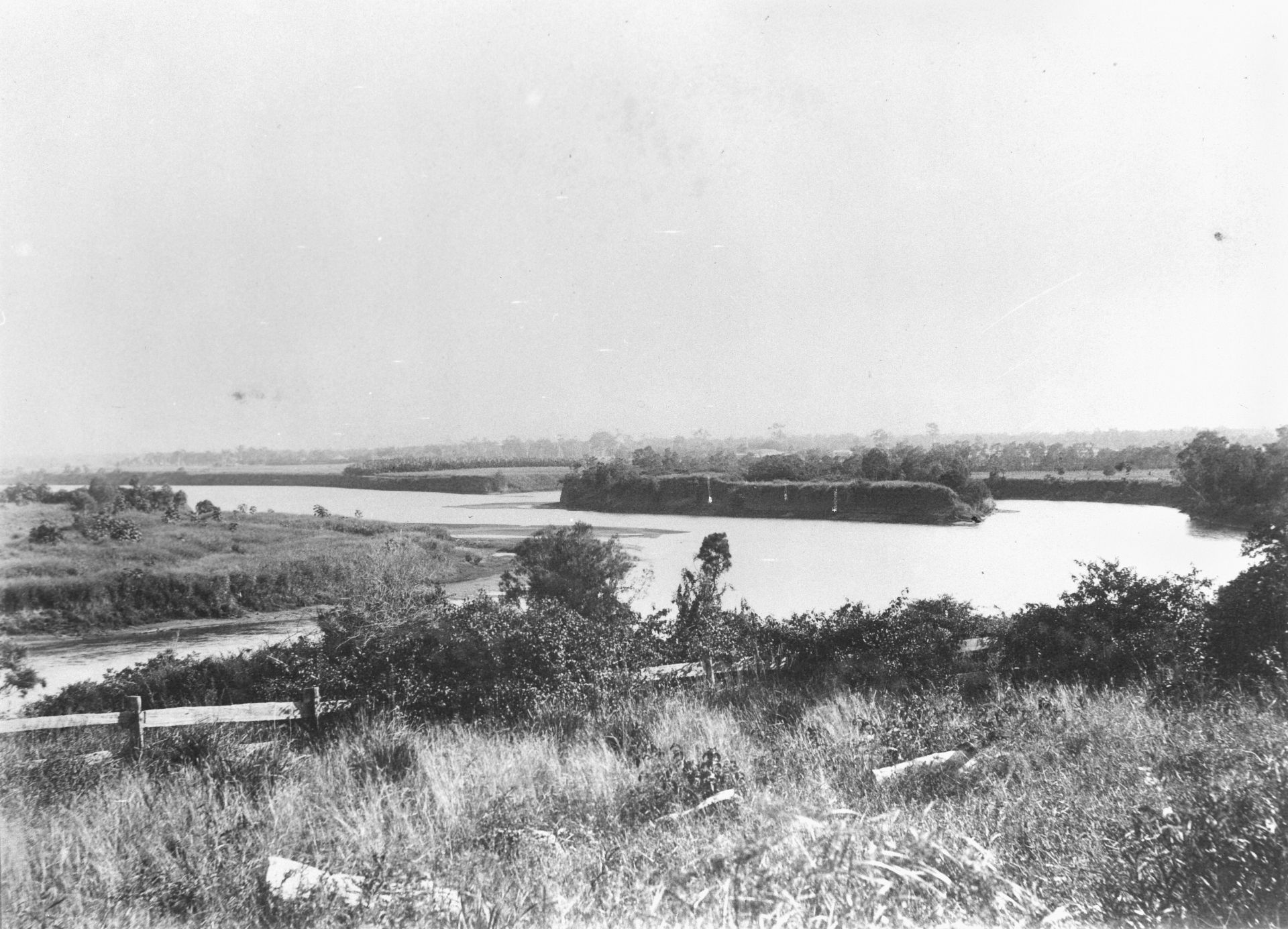
Burnett River, Bundaberg, 1909 Burnett River, Bundaberg, Queensland, 1909 (State Library of Queensland)

Journey and Reception in Australia

Although opposition to South Sea Islanders was almost non-existent upon their arrival in Queensland, the success of Chinese migrants in Australia and accounts of Indian workers prospering and competing with locals in British colonies created paranoia and fear about non-European migrants, resulting in the formation of groups titled 'anti-coolie leagues'.

This resulted in the Devonshire contingent facing significant opposition from locals upon arrival in Queensland.

The Devonshire arrived in Mackay on November 3, 1882. Although the ship was pelted with stones by locals upon arrival, the migrants were able to go to their lodging without great interruption.

Unlike in Mackay, Bundaberg had multiple local newspapers engaged in rivalry with one another. The arrival of the new migrants gave the newspapers an opportunity to 'put on show their journalistic skills', causing greater media attention upon their arrival. One newspaper, the Bundaberg Star, announced the arrival of the Devonshire 'enclosed in thick, black bands in the manner of an obituary notice', prompting fear and excitement from locals.

The Battle of the Burnett

As the migrants disembarked at the head of the Burnett River in Bundaberg and marched to Rubyanna plantation, anti-coolie league members approached them 'shouting abuse and raising fists'.

In response, the migrants 'drew out their knives as though prepared to sell their lives dearly', causing the league members to promptly retreat. This incident was coined the 'Battle of the Burnett'.

Although the league members were unsuccessful in their confrontation with the migrants, the 'Battle of the Burnett' was a propaganda victory, as it publicised the planters' attempt to import foreign labour.

There were allegations of deceit amongst the workers, who claimed they had been told of Queensland as a 'land flowing with milk and honey' and upon arrival, 'heard to express horror at their first sight of the Australian bush'.

The planters, who invested a significant amount of money to bring the workers to Queensland, became anxious to see the workers to their plantations. Anti-coolie league members incited the workers to rebel against the planters. With outside interference, the planters were unable to talk the workers into honouring their contracts.

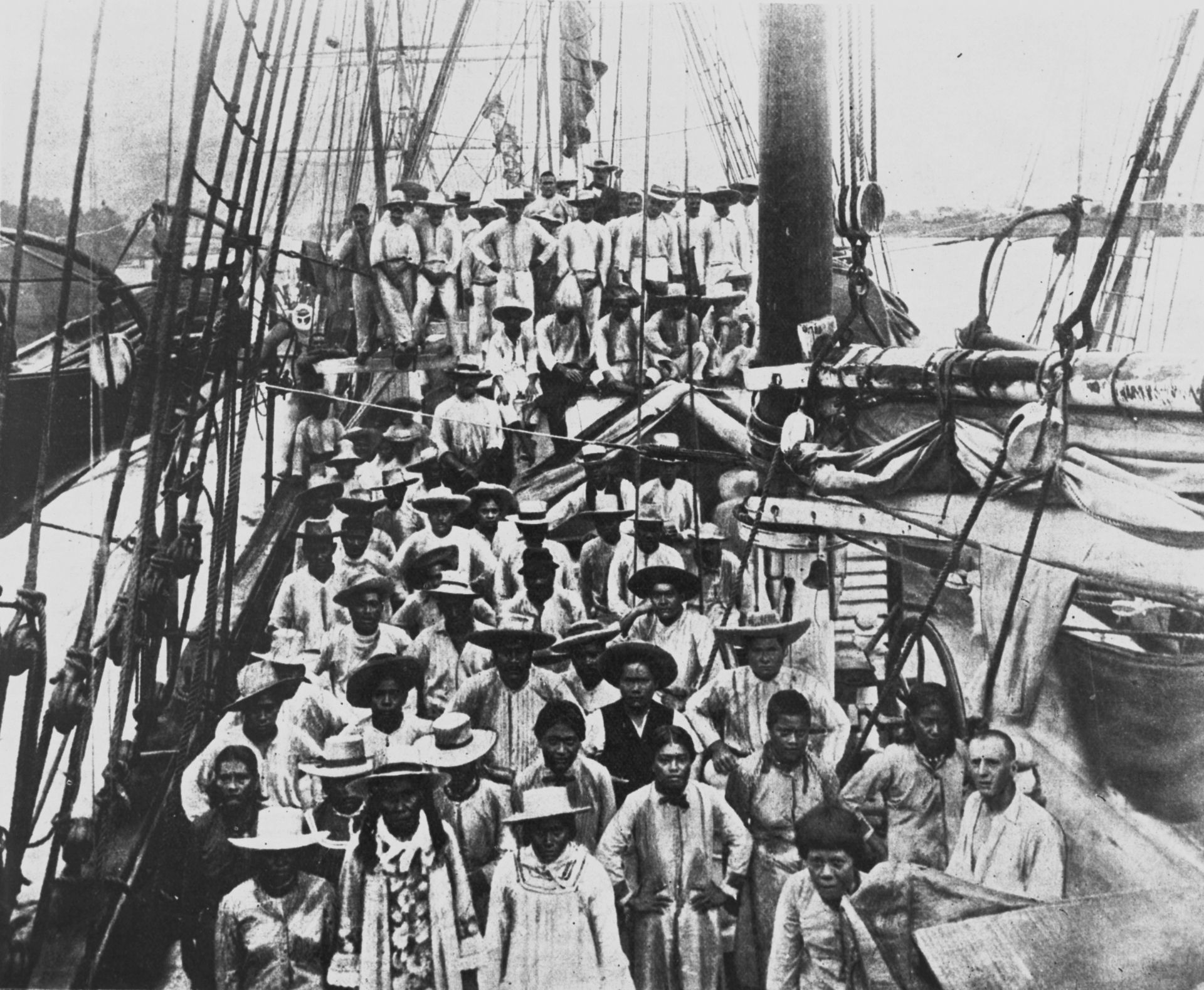
South Sea Islanders on the deck of a ship arriving at Bundaberg, 1895 South Sea Islanders on the deck of a ship arriving at Bundaberg, 1895 (State Library of Queensland)

Refusal to Work & Fate in Queensland

As evidenced by newspaper articles and records, many migrants refused to work, instead opting to go to jail. As a result, many workers broke their contracts, and drifted into other parts of Queensland and northern New South Wales. Many found it challenging to work due to the reluctance to hire non-Europeans.

Those able to afford the return passage returned to Ceylon due to homesickness and oppressive conditions towards non-Europeans in Australia. As most had broken their contracts, many were no longer entitled to the free passage listed on their contracts and remained in Australia after federation in 1901. This is in contrast to many South Sea Islanders that were forcibly deported from Australia under the Pacific Island Labourers Act 1901. Those who remained on the Australian mainland quickly lost their cultural connections and identity.

Others migrated to Thursday Island in North-Eastern Queensland in the Torres Strait, where a significant number of non-European migration took place due to its proximity to Asia and the pearling industry. The formation of a distinct Sri Lankan community on Thursday Island is documented by Stanley Sparkes and Anna Shnukal in the book Navigating Boundaries6.

Part 3 — The Fate of the
Devonshire Migrants

Digital Project: What happened to the 500 onboard the Devonshire?

The decision to hire labour from Ceylon and the arrival of the Devonshire are relatively well-documented by primary and secondary sources. This is due to the controversial nature of importing non-European labour at the time and the refusal of many migrants to work, which resulted in heightened media attention.

Most of the existing information about the migrants is from newspaper articles and records detailing their mishaps with the law, and reveals that they were often perceived as criminals and undesirable additions to Australia's population.

Therefore, the lack of information about the lives the migrants led after settling in Queensland paints an unbalanced picture of this group, and does not feature those who abided by their contracts or went on to become successful.

In order to address this gap of information, this project aims to answer the following questions:

Why were the Devonshire migrants permitted to remain in Australia at a time when other non-Europeans (such as South Sea Islanders) were forcibly deported?

What were these migrants' contributions to their local community and society?

Cultural Context & Explanation of Terms

A majority of the Devonshire migrants were low-country Sinhalese people from Southern/Coastal regions of present-day Sri Lanka. These regions were heavily influenced by Portuguese, Dutch and British colonisation, and as a result, many individuals were Roman Catholic, and follow region-specific naming conventions:

Many migrants have the name Appo/Appoo/Appu, which originates from අප්පු (appu), and is used as a second name/honorific for men. This is the same case for women with හාමි (hami). These were mistaken as surnames in Australia. Therefore, although many migrants share these names, they are not necessarily related to one another.

Singho/Singo (සිඤ්ඤෝ) is another common name that many of the migrants shared. It is believed to be a derivation of the Portuguese word senhor, or the Sinhalese word for lion.

Several scholars refer to these migrants as Cingalese in their works, which is an outdated spelling for Sinhalese people native to Sri Lanka. Aside from Sinhalese people, there were also Sri Lankan Malays, Tamils and Moors as well as a small number of Bengali Indians in the Devonshire contingent. Therefore, the term Cingalese may be the most appropriate term to describe both Ceylonese and non-Ceylonese migrants that embarked onboard the Devonshire.

Kanaka and coolie are two pejorative terms used frequently in newspaper publications of the era. These terms aid with understanding of the attitudes of resentment and contempt towards non-European workers at the time, and are used here for that historical context only.

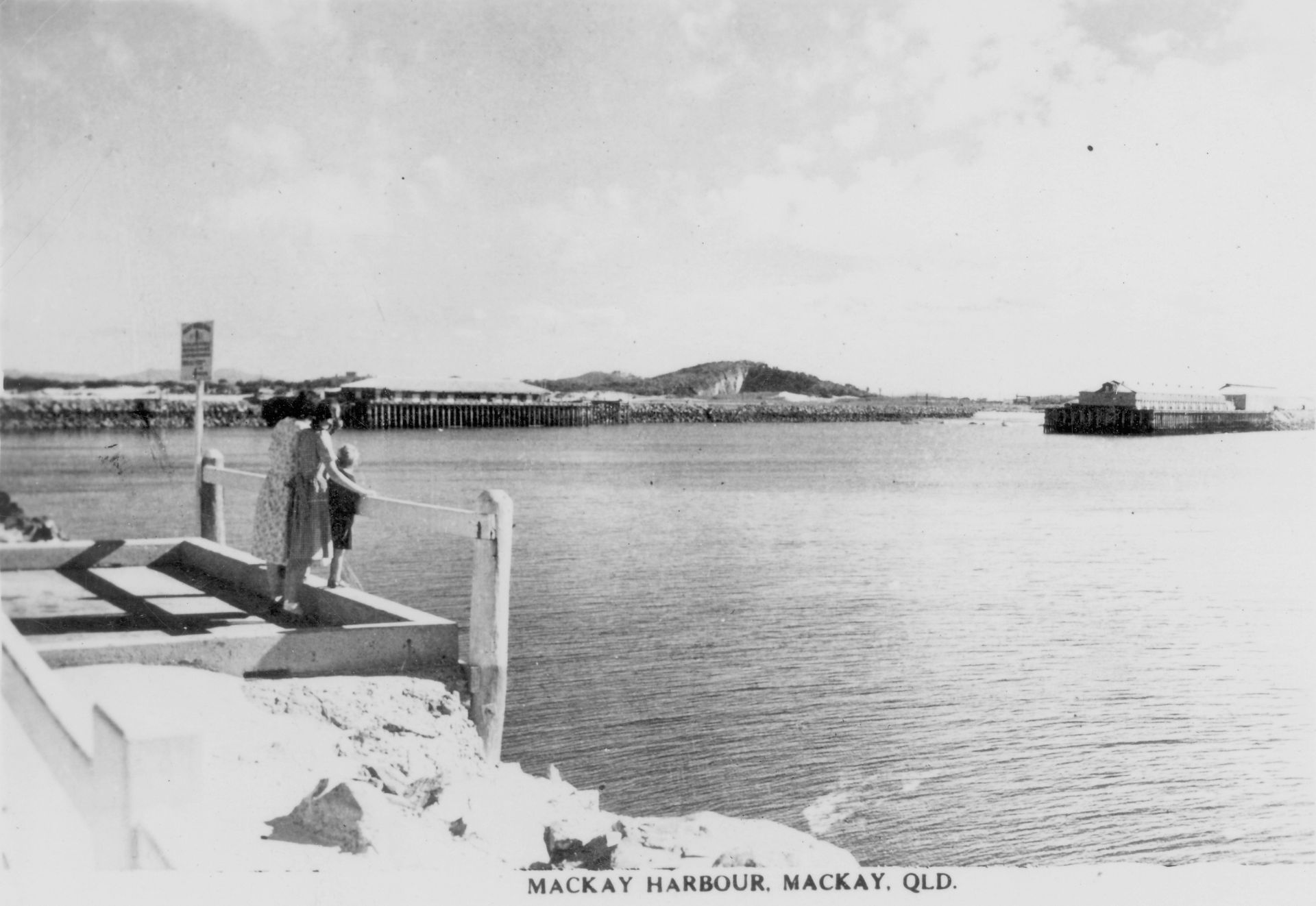
Mackay Harbour, Mackay, Queensland, 1950 Mackay Harbour, Mackay, Queensland, 1950 (Mackay Regional Council Libraries)

Methodology

To answer the research questions, I set out on a journey to recreate the missing list of 500 passengers onboard the Devonshire. I looked to the Queensland State Archives, ancestry.com and findagrave.com, and the Coloured Labour and Asiatic Labour Index 1913, which contained some names of those residing in locations such as Townsville & Rockhampton.

The passenger list of the Devonshire has been lost, and until now, none of the graves of the migrants have been located. Additionally, many of the names have been miswritten and confused with other non-Europeans, such as South Sea Islanders, British Indians or Javanese, making it difficult to identify the migrants.

I then assembled a spreadsheet containing date & location of birth/death, occupation, location of burial and cause of death. As a result, I was able to identify around 70 of the 500 Devonshire migrants. From this list, I have chosen to feature the stories of 30 migrants in this project.

500
People onboard
the SS Devonshire
70
Migrants identified
from historical records
30
Profiles featured
in this project

Migrant Profiles

30 of the ~70 identified Devonshire migrants are profiled here. Most historical records come from newspapers and court documents. Click any portrait to read their story.

Landamullagay Barmis Singho
Landamullagay Barmis Singho 1871 – 1934
Kallu Appoo
Kallu (Call) Appoo 1860 – 1954
WS Widdarulargay Silva
Widdarulargay Silva 1847 – 1923
JW James G. Williams
James G. Williams 1866 – 1954
HA Hendrick Appoo
Hendrick Appoo c.1861 – 1936
Sara Wenitong
Sara Wenitong 1870 – 1937
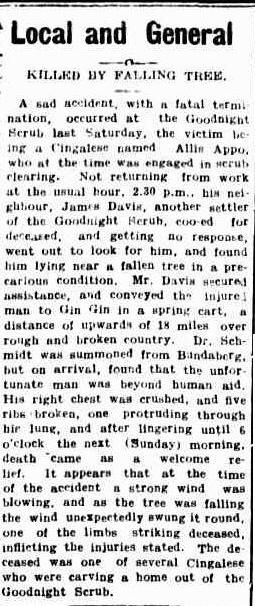
Allis Appoo newspaper clipping
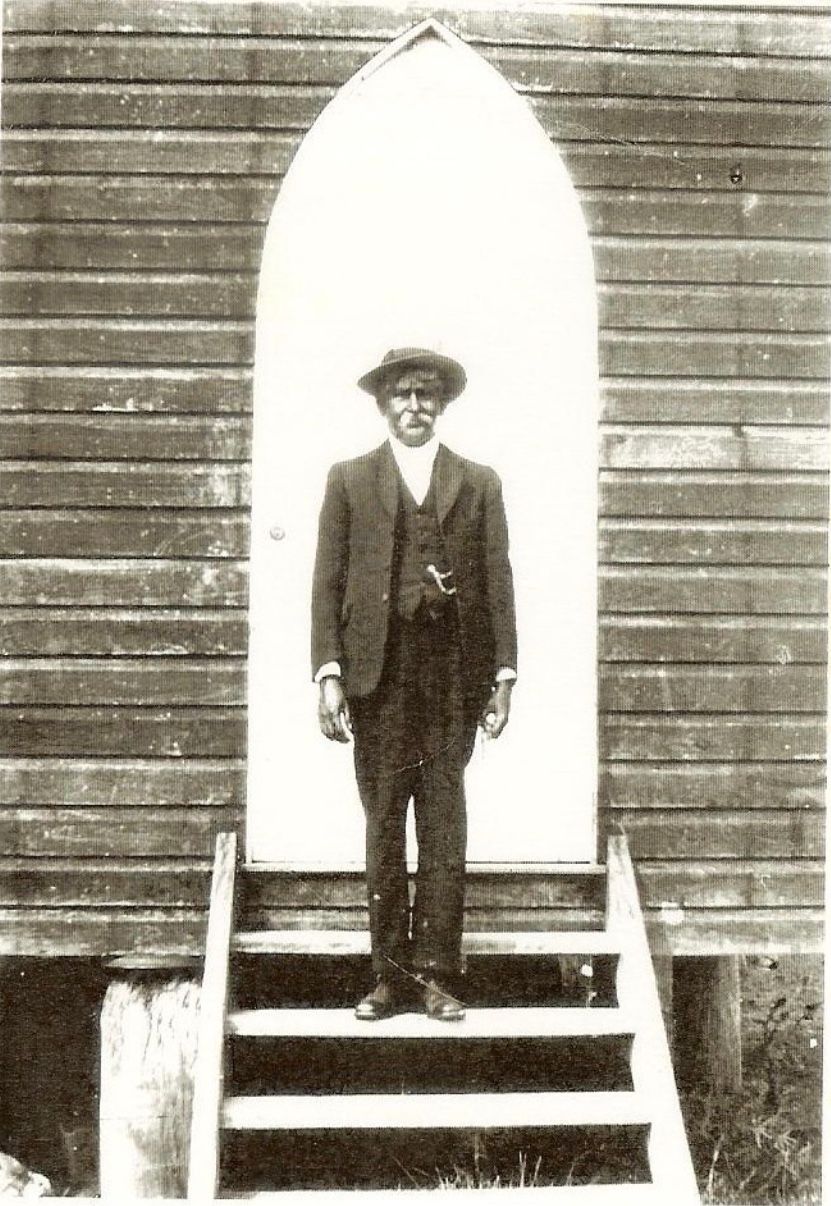
Allis Appoo Unknown – 1914
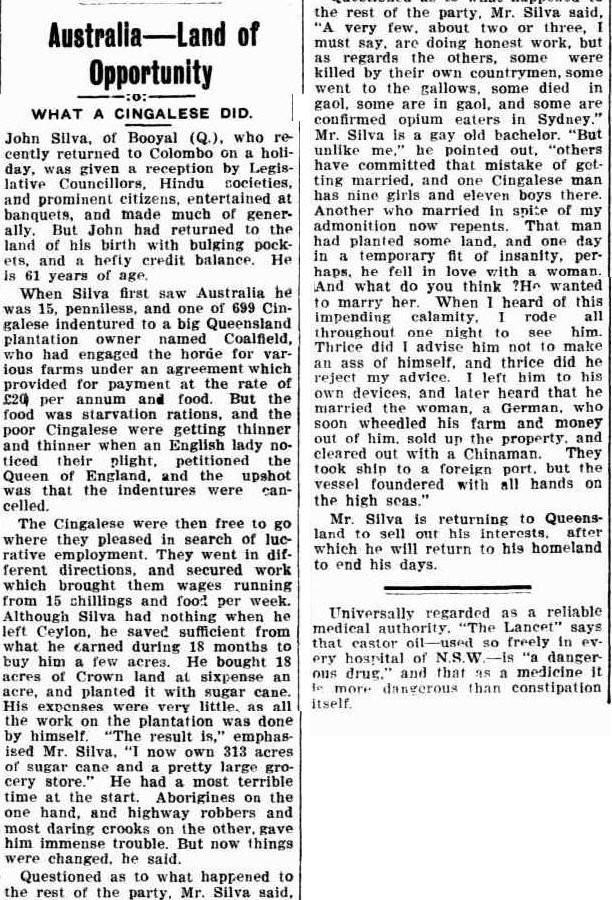
John Silva newspaper clipping
John Silva c.1865 – returned to Ceylon
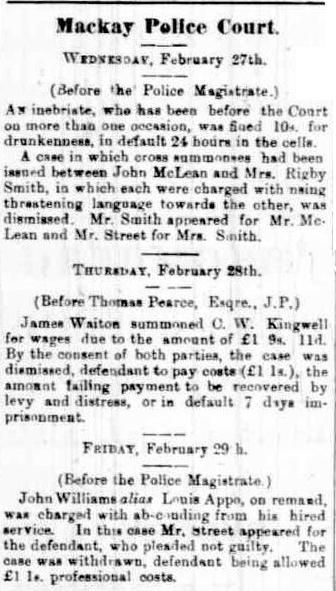
Louis Appoo newspaper
Louis Appoo c.1852 – 1937
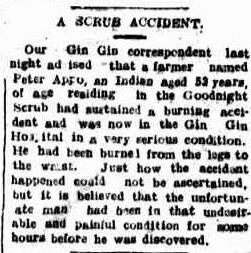
Peter Appoo newspaper
Peter Appoo Unknown – 1916
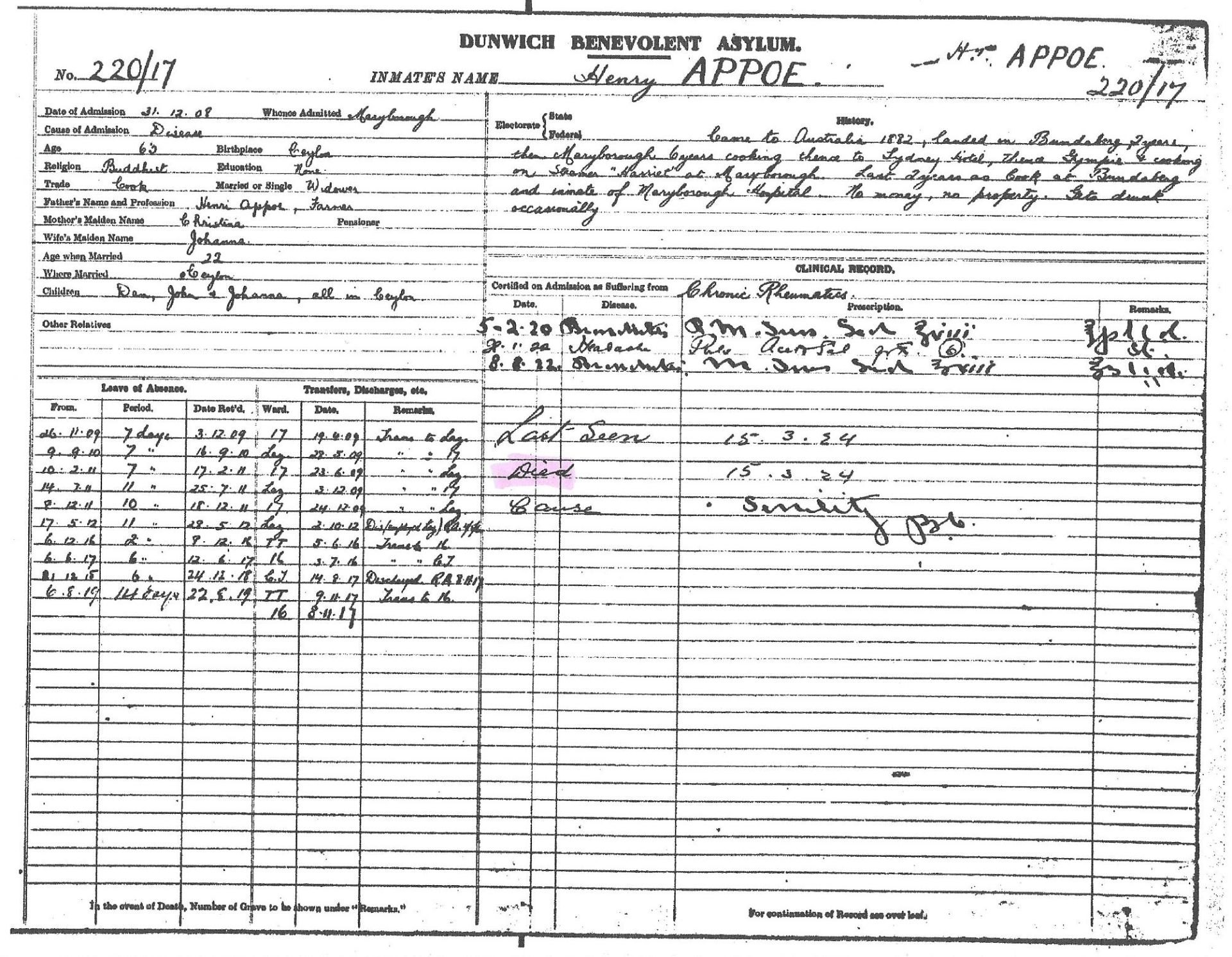
Henry Appoe Dunwich form
Henry Appoe 1845 – 1924
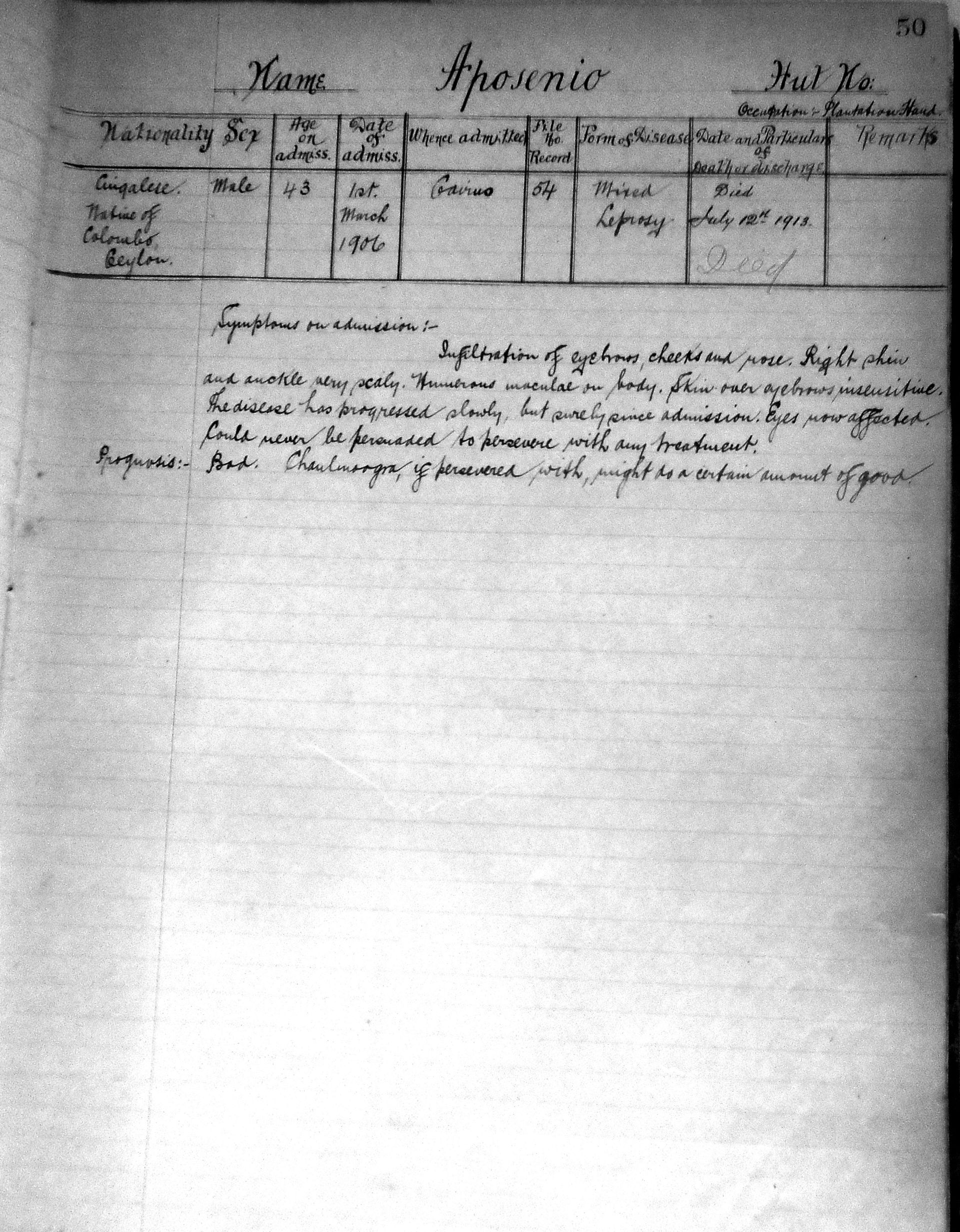
Aposenio admission form
Aposenio 1863 – 1913
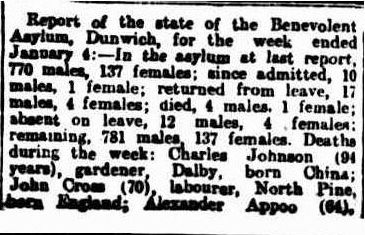
Alexander Appoo newspaper
Alexander Appoo 1848 – 1912
BP Baron Pereira
Baron Pereira Unknown – 1883
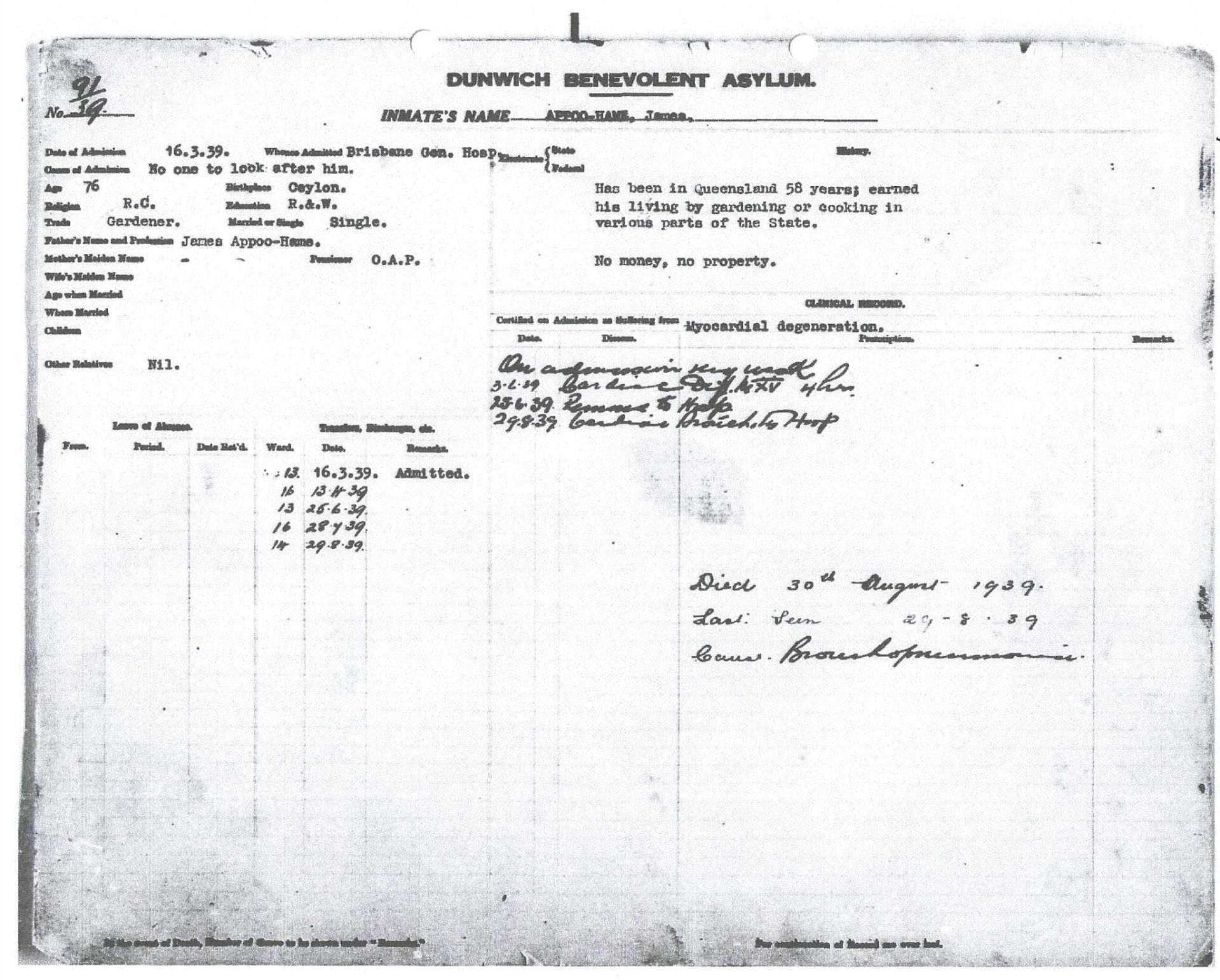
James Appo-Hame form
James Appo-Hame 1869 – 1939
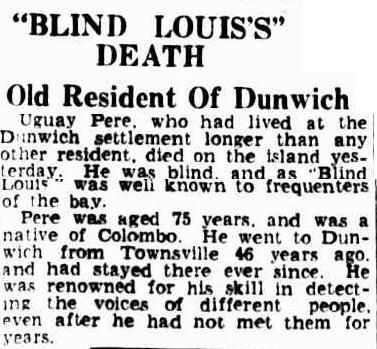
Uguay Pere newspaper
Uguay Pere 1863 – 1937
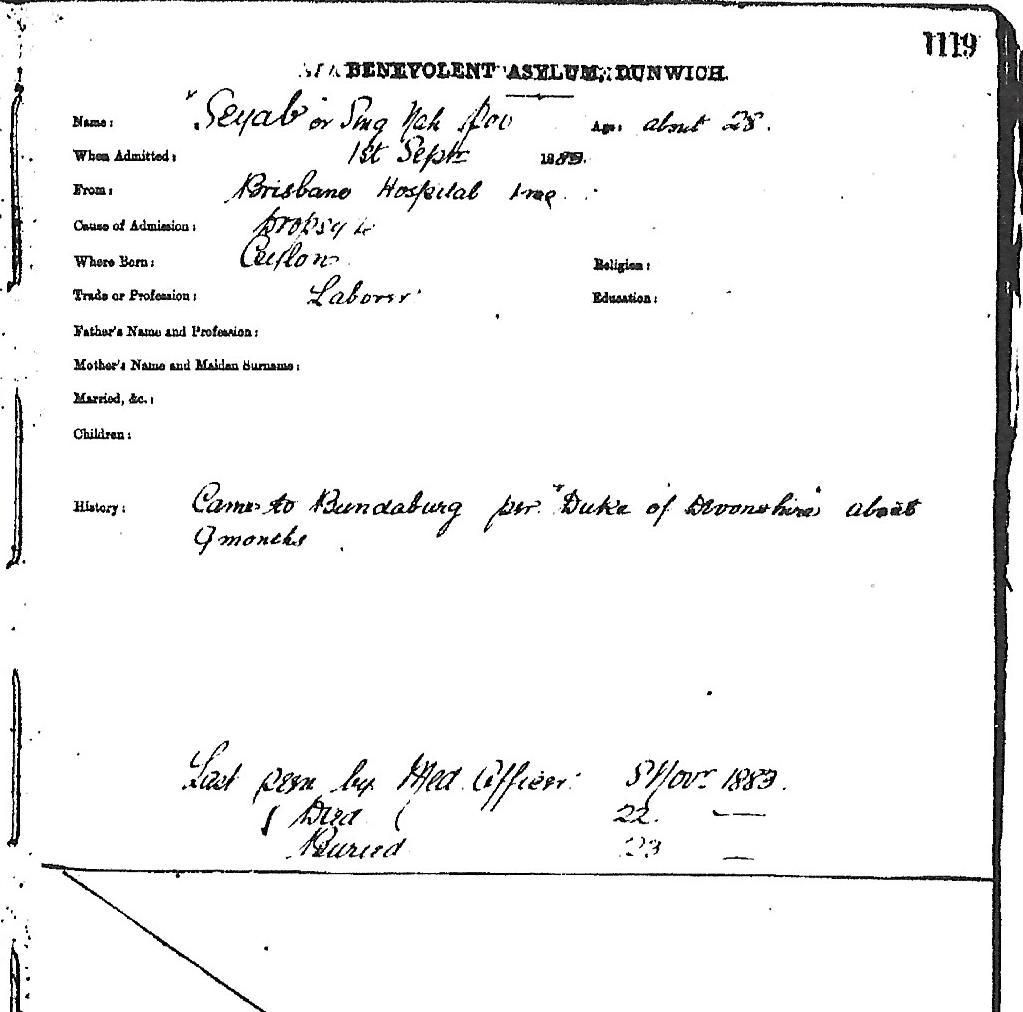
Sing Nah Poo form
Sing Nah 'Seyab' Poo 1855 – 1883
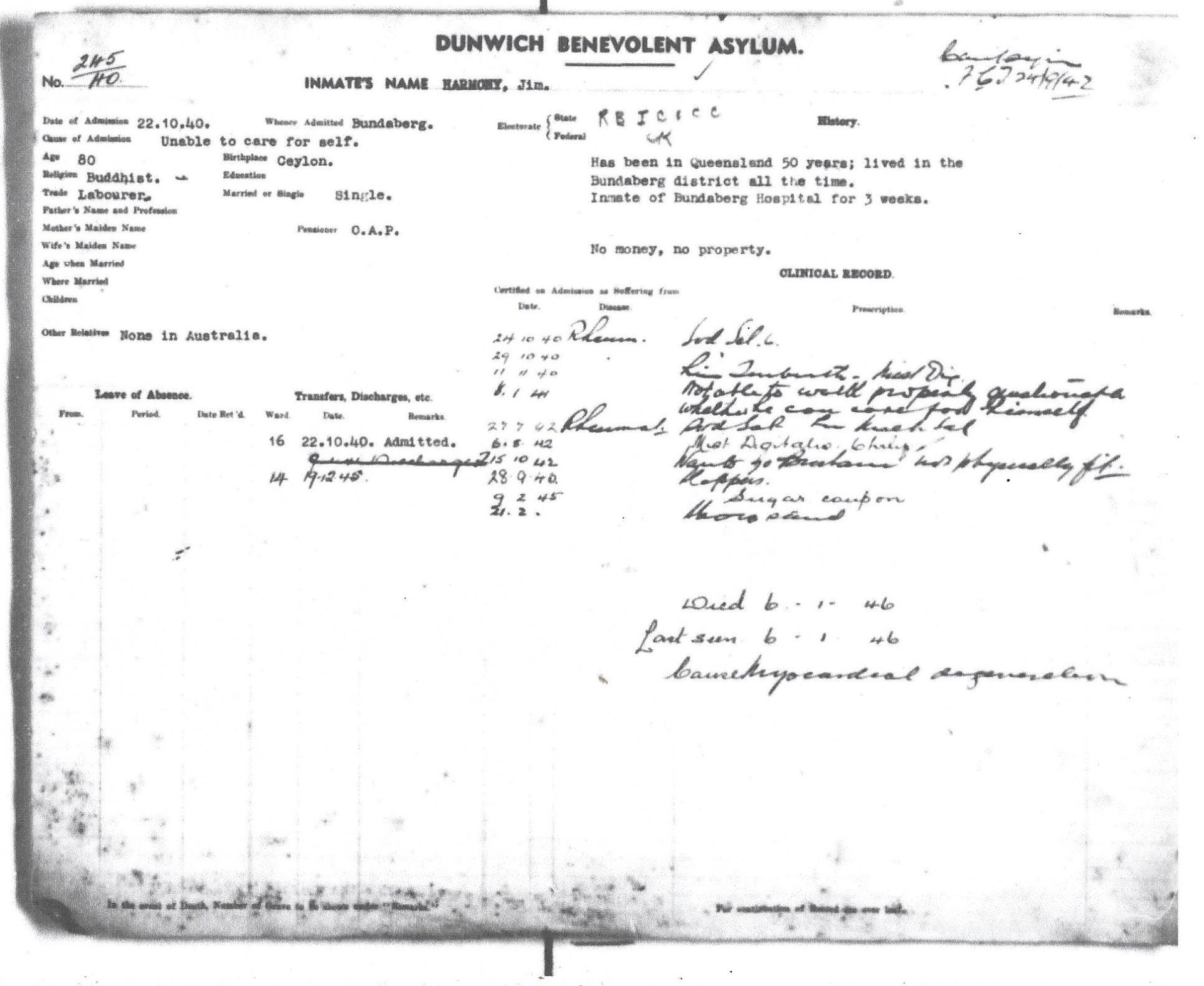
Jim Harmony form
Jim Harmony 1861 – 1946
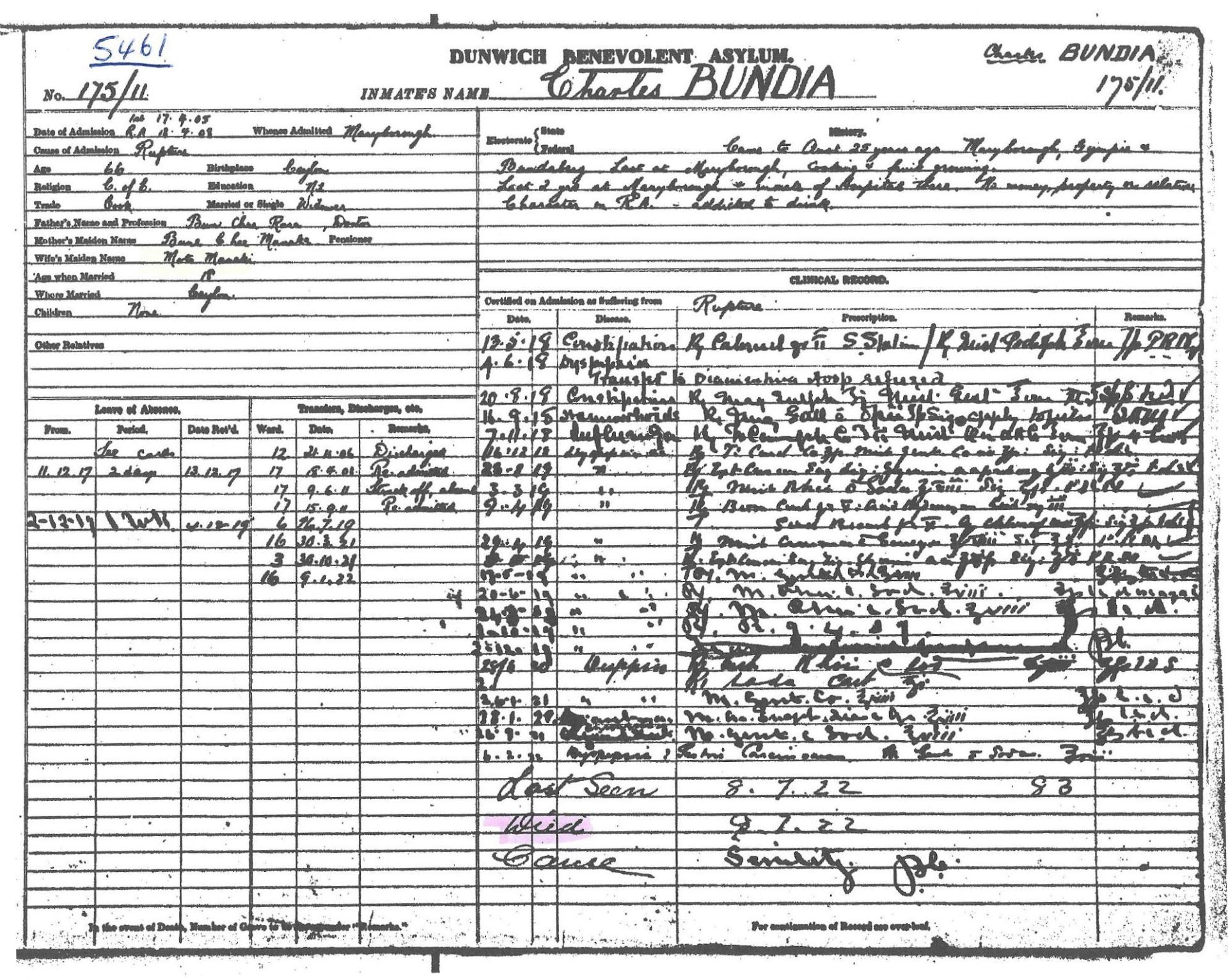
Charles Bundia form
Charles Bundia 1839 – 1922
SA Sardis Appo
Sardis Appo c.1862 – 1937
JD James Davis
James Davis 1865 – 1945
Sing Appu newspaper
Sing Appu Unknown – 1940
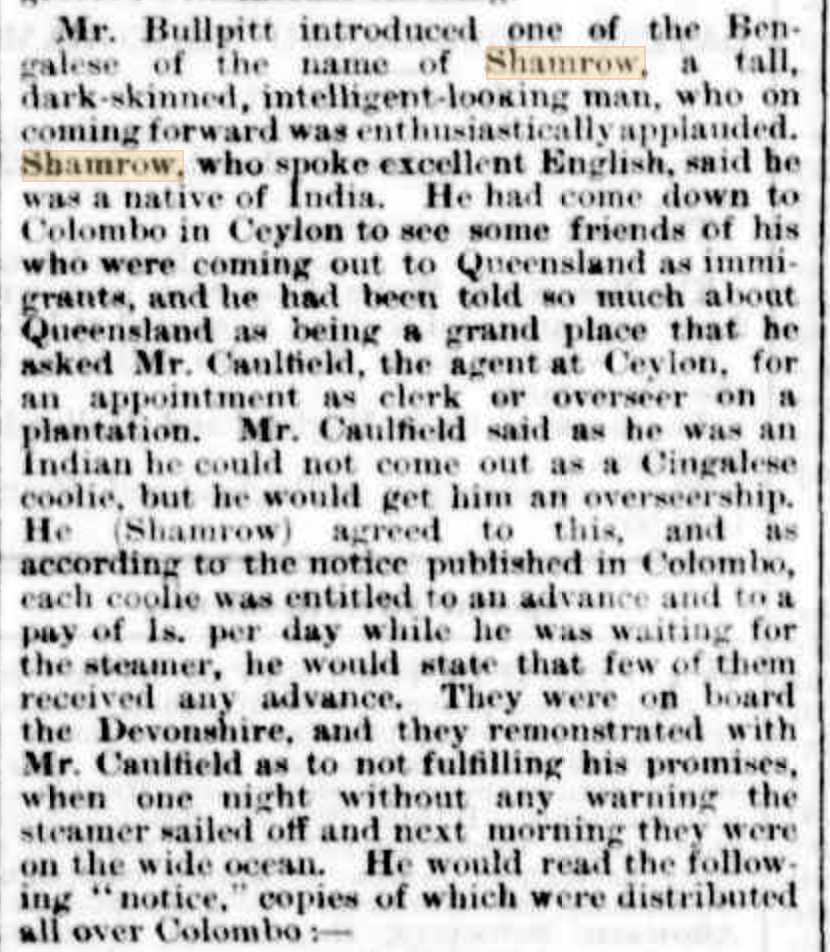
Shamrow newspaper
Shamrow Unknown – Unknown
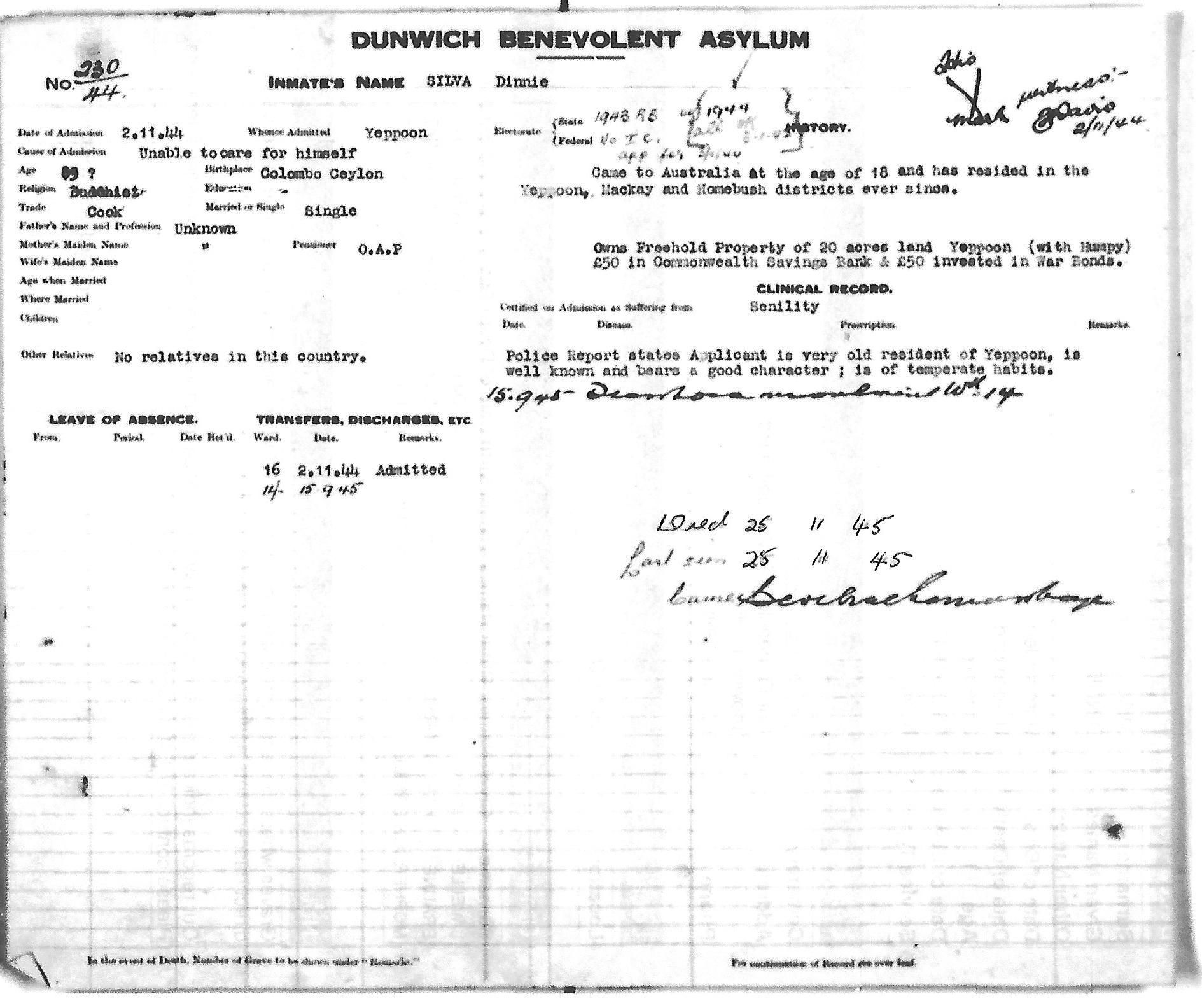
Dinnie Silva form
Dinnie Silva 1859 – 1945
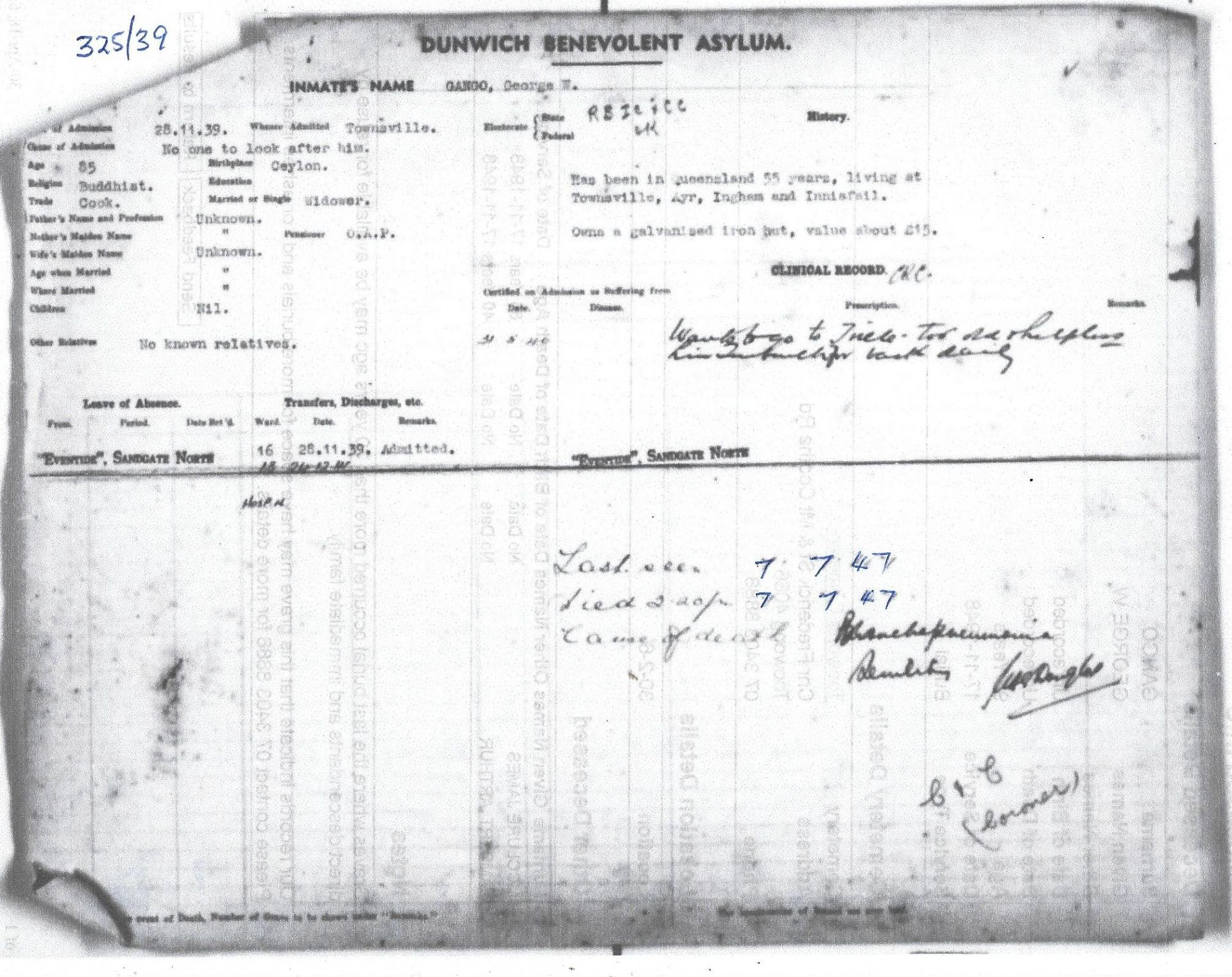
George Gango form
George W. Gango 1855 – 1947
JW John James Wenitong
John James Wenitong 1872 – 1946
CW Charlie Williams
Charlie Williams Unknown – 1893
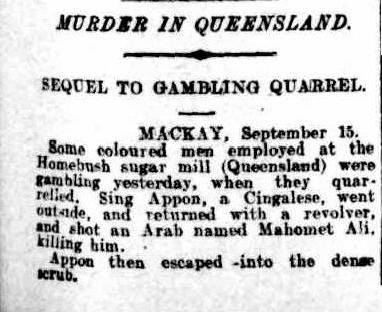
SA Sing Apoo
Sing Apoo Unknown – 1908
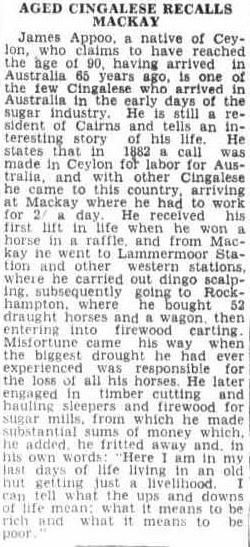
James Appoo newspaper
James Appoo c.1869 – 1951
Johannes prison record
Johannes 1867 – 1906

Summary & Findings

Of the 70 migrants identified, a majority worked as farmers, labourers, cooks and gardeners. Groups of migrants appear to have clustered in the following locations, which warrant further research:

About

I am an Australian of Sri Lankan descent who is currently part of Lafayette College's Class of 2025 studying Engineering and International Studies.

Since I learned of the Devonshire migration in 1882, I have been curious to discover what happened and the stories of those onboard it. In 2019, I completed a research paper on this topic about the role of employer action on the failed attempt to source indentured labour from Ceylon in 1882.

This project was done for the College's Digital Humanities Summer Scholars (DHSS) program.